
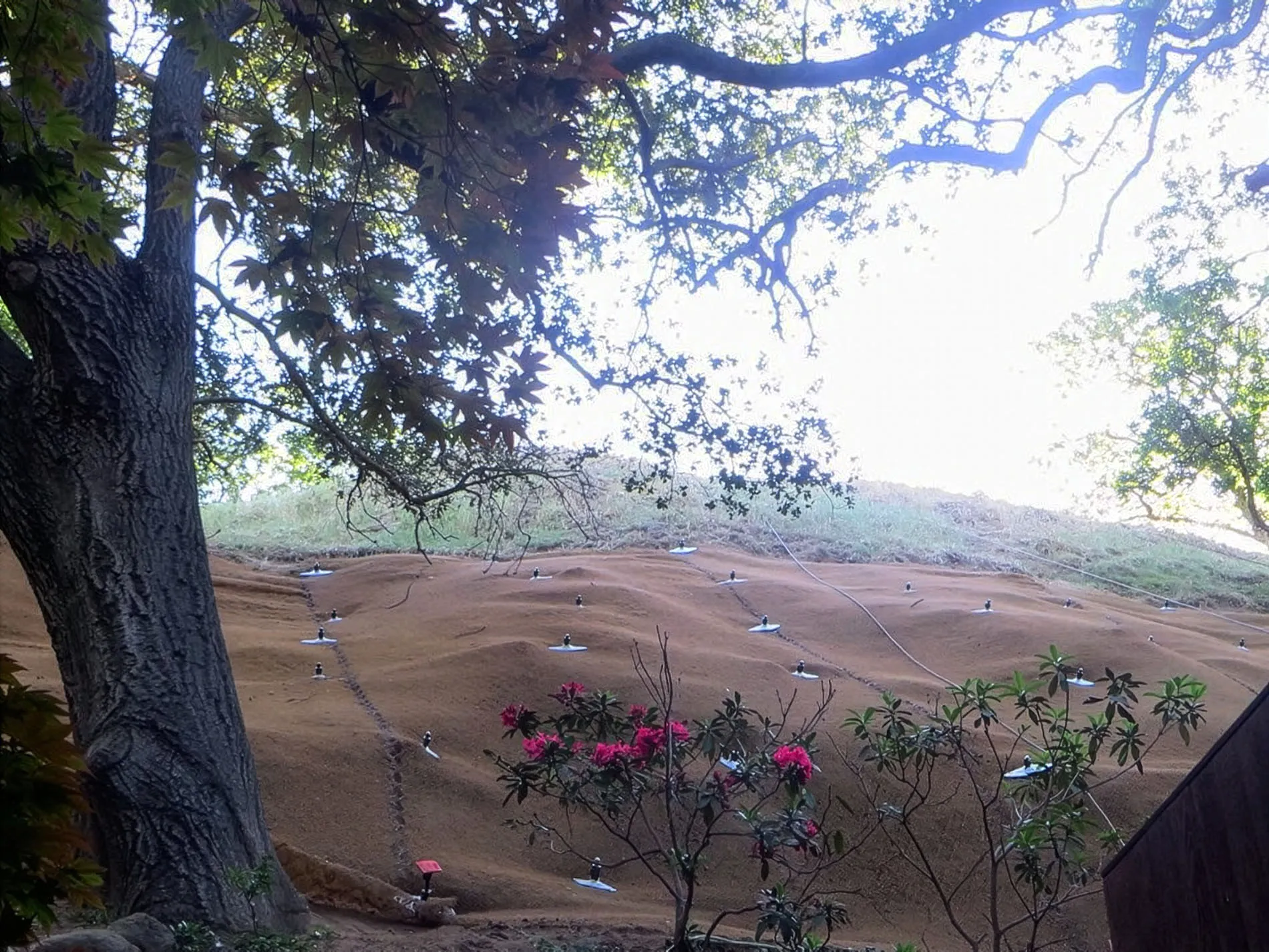
Foundation issues often show up in subtle but important ways long before major structural damage occurs. Common warning signs include cracks in interior or exterior walls, doors and windows that begin to stick, and visible uneven settling or slope in the structure. While these symptoms can indicate foundation movement, they don’t always point to severe failure—in many cases, they’re actually related to soil conditions and moisture imbalance around the home.
In regions with expansive soils (like much of Northern California), soil can swell when wet and shrink when dry, which creates ongoing movement beneath a foundation. Poor or inconsistent drainage around the home can worsen this cycle, especially when roof runoff and seasonal weather changes cause alternating saturation and drying. Without a properly engineered solution, even well-installed supports like piles may not prevent movement if soil behavior isn’t addressed.
Addressing soil and drainage issues early is critical for avoiding long-term structural damage. A properly designed system that combines drainage correction with engineered foundation repair can stabilize moisture levels and prevent repeated shifting. Left unchecked, these conditions can lead to escalating repair needs and potentially hundreds of thousands of dollars in damage over time.