.webp?w=3840&q=75)
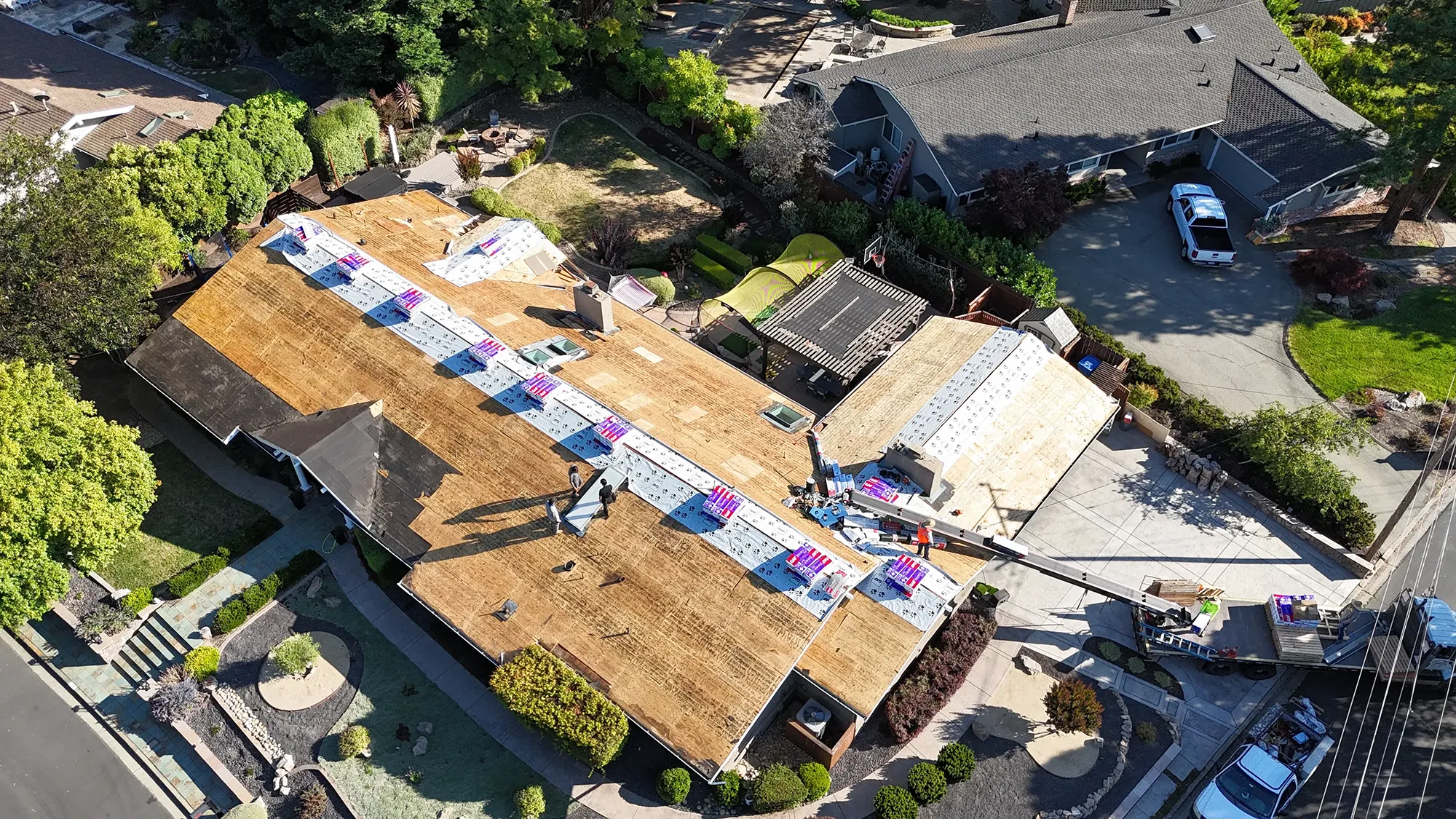
Replacing a roof can feel overwhelming at first—you may know what you want the end result to look like, but the process leading up to that might seem unclear. Here’s what to expect at each phase of the roof replacement process:
1. Preparation and tear-off
The first phase of reroofing focuses on evaluating your property and the type of roofing system you have, which will determine your contractor’s approach. Logistics also come into play, like where to place a dump truck or trailer to gather old materials. During tear-off, the crew may uncover underlying issues like damaged plywood, which will need to be fixed before moving forward. This phase is less about what you see and more about ensuring the structure beneath your roof is ready for a new system.
2. Installation
The second phase is where your new roof takes shape, but it’s important to understand that a roof is more than just shingles—it’s a complete system comprised of multiple components that work together to protect your home. Key elements include the roof decking (plywood), underlayment (felt or synthetic), starter strips, shingles, ridge caps and ventilation systems. Each component plays a role in preventing water intrusion and regulating airflow. Your contractor will evaluate these elements and tailor the roofing system to meet your home’s specific needs.
3. Final delivery and cleanup
The last phase is about delivering a finished product that meets both performance and cleanliness standards. The crew should thoroughly clean the jobsite to remove debris, stray materials and loose nails. The goal is to leave your property as clean as it was before the project began.