.webp?w=3840&q=75)
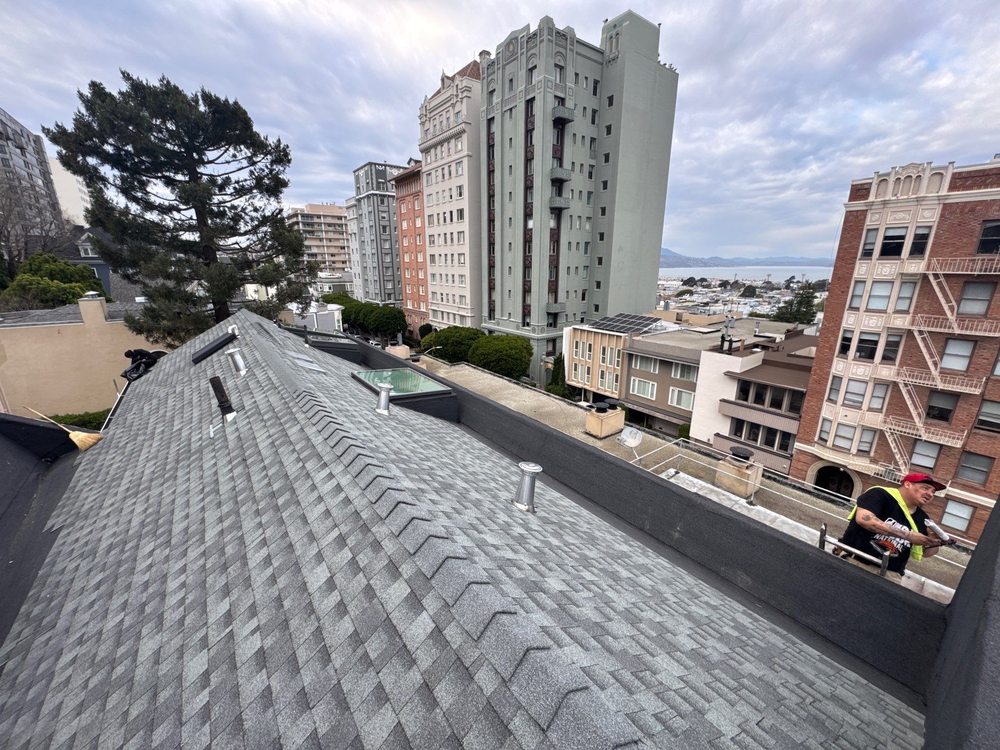
Not every roofing problem requires a full replacement, but as a roof ages, individual repairs can become less effective. That’s because roofing materials lose their flexibility and weather-resistance over time. Older shingles may crack or curl, lose granules, or become more vulnerable to wind and water.
Problems can also develop around flashing, vents, valleys and other roof penetrations. Even something as simple as a clogged downspout can contribute to damage by causing water to back up and overflow at the roof edge. Repeated exposure to this moisture can affect shingles, underlayment, decking, and fascia and potentially lead to rot, staining, mold or leaks.
When deciding between repair and replacement, consider your roof as a complete system. Factors like the age of the roof; the number of leaks; and the condition of the shingles, flashing, and decking all matter.
If the problems are isolated and the rest of the roof remains in good condition, repairs may be appropriate. However, if there are multiple leaks or widespread deterioration, continued repairs may only provide temporary fixes. In those cases, a full replacement is a more reliable option.
Roof Express
|
Roof Express
Diamond Certified Company Report Menu
Evaluating the roof as a complete system can help determine whether isolated repairs are sufficient or replacement is the better approach.
Is Your Roof Worth Repairing?
By Abosufian Merzayee
Owner of Roof Express
Diamond Certified Expert Contributor
Roof Express is presented in these Diamond Certified Resource Category Reports
alameda County, CA
contra costa County, CA
Schedule Now or Call with Questions