
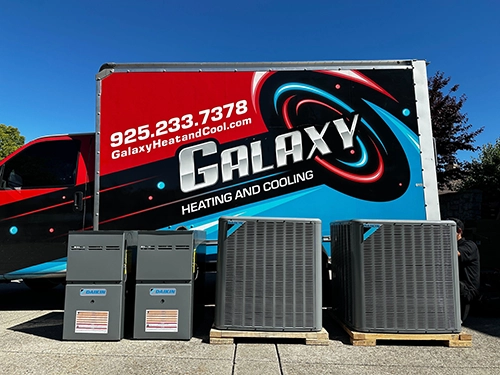
When it’s time to replace an HVAC system, many homeowners assume that choosing something from a well-known manufacturer will guarantee strong performance. However, while equipment quality definitely matters, it’s only one part of the equation. A heating and cooling system will only work as well as it’s designed, sized, and installed. Here are three things to focus on when making your choice:
Get the right size. It may seem logical that a larger system would heat or cool your home faster, but HVAC systems don’t work that way. When a system is too large for the home, it can turn on and off too frequently instead of running through full, efficient cycles. This is known as “short cycling,” and it can lead to uneven temperatures, higher energy bills, excess wear on equipment, and poor humidity control in hot weather.
Don’t skip proper load calculation. Your contractor should perform a Manual J calculation, which considers factors like square footage, insulation, windows, layout, and sun exposure to determine how much heating and cooling your home actually needs. Without this step, your HVAC system may end up too large or too small, which can lead to poor performance and wasted energy.
Don’t underestimate ductwork. Airflow is just as important as the equipment itself. The HVAC system, ducts, vents and return air pathways all need to work together to move conditioned air efficiently. If airflow is limited, the system may have trouble maintaining consistent temperatures, which can lead to hot and cold spots, reduced comfort, and higher energy use.