
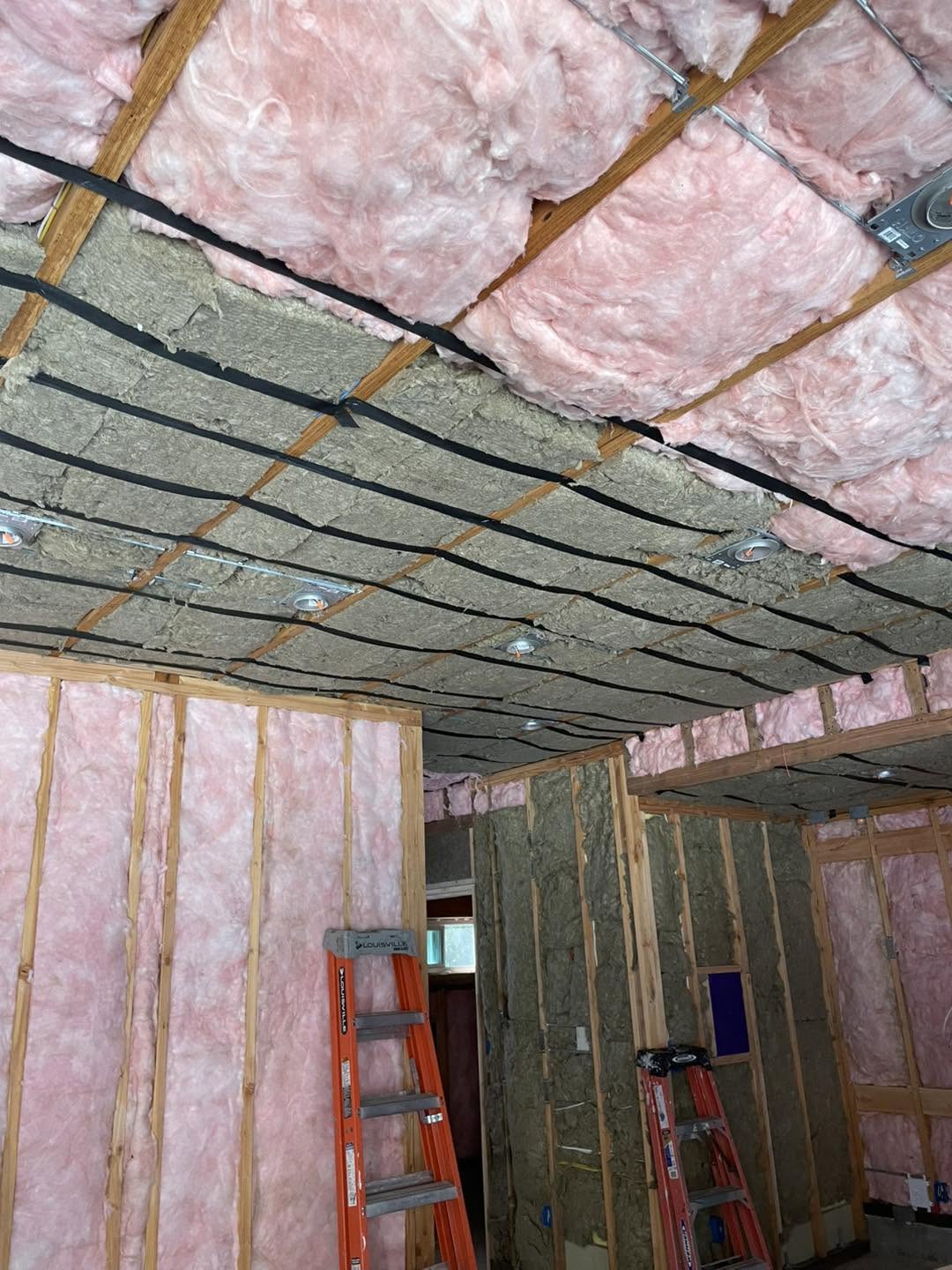
Choosing insulation isn’t simply a matter of finding the least expensive product. Every material has advantages and disadvantages, so the right choice depends on where it will be installed, how the space is used, your home’s construction and your priorities. Here are three steps to take before making a decision:
Compare the materials. Fiberglass batts are easy to handle as individual pieces, while blown-in cellulose can create a more continuous insulating blanket. Cellulose is a wood-based fiber treated with borates that help deter insects and rodents. Spray foam provides both insulation and air sealing, but it’s difficult to remove once applied and requires careful installation and curing. You should also consider potential sensitivities and indoor air quality when comparing products.
Identify where insulation will make the biggest difference. A home energy audit can help you determine which improvements will provide the greatest return. The attic is often a good place to start, particularly if its existing insulation is inadequate. However, older homes may not even have insulation in the walls or beneath raised floors. If one part of your home’s thermal boundary is completely uninsulated, addressing that area may be more beneficial than adding insulation where some already exists.
Don’t overlook ventilation. Insulation and air sealing can improve indoor comfort and energy efficiency, but your home shouldn’t be tightened without considering its ventilation needs. A professional can evaluate the home as a complete system and recommend improvements that will increase energy efficiency without negatively affecting airflow or indoor air quality.
McHale's Environmental Insulation, Inc.
|
McHale's Environmental Insulation, Inc.
Diamond Certified Company Report Menu
Insulation helps slow heat transfer through a home’s walls and ceiling, improving indoor comfort and energy efficiency.
Evaluate Before You Insulate
By Daniel Hair
President of McHale's Environmental Insulation, Inc.
Diamond Certified Expert Contributor
McHale's Environmental Insulation, Inc. is presented in these Diamond Certified Resource Category Reports
alameda County, CA
contra costa County, CA
Schedule Now or Call with Questions