
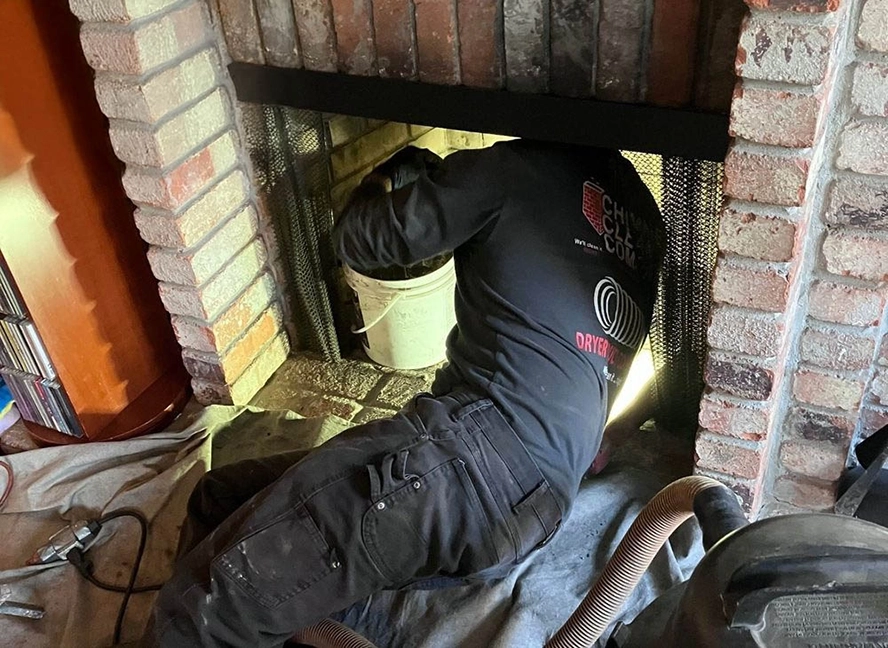
Chimney cleaning is a critical part of home safety that many homeowners overlook. When you burn wood in a fireplace, especially one with limited airflow, not all gases fully combust. These unburned gases rise into the chimney and cool, condensing into a sticky, tar-like material called creosote (commonly referred to as soot). Over time, this residue accumulates and can ignite with alarming intensity when exposed to high heat.
To keep your home safe, you should have your chimney inspected once a year and cleaned as needed based on usage. If you use your fireplace every night during the winter, an annual cleaning is necessary. If you use it every other night, cleaning every two years is sufficient. For occasional use, every three years is generally adequate. However, the inspection should always happen annually regardless of how often you use the fireplace. This is especially important in areas prone to seismic activity, as even an unused chimney can develop structural issues like cracks that compromise safety.