
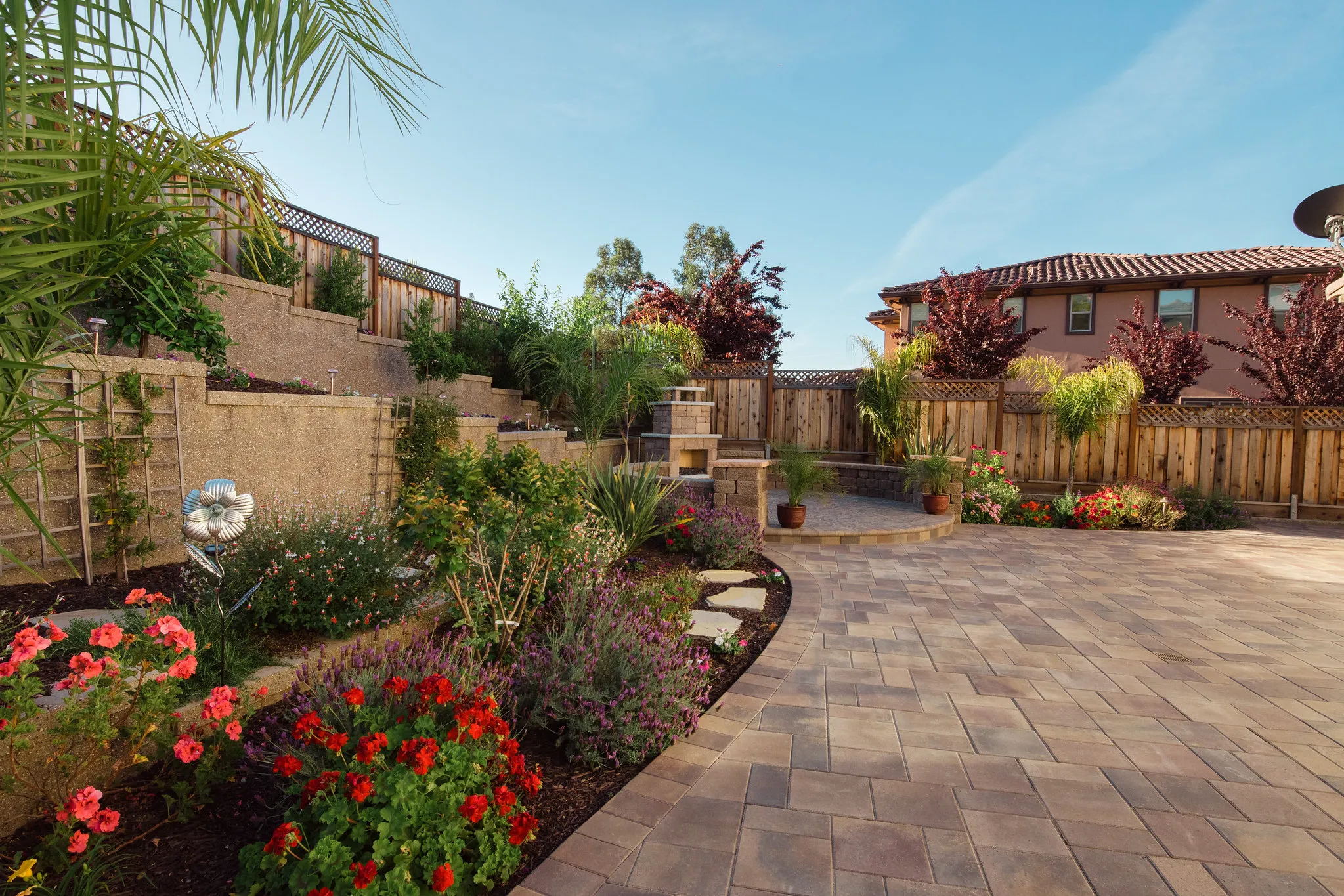
SAN JOSE — When planning to replace your driveway, the first thing you’ll need to decide is what type of hardscape material you want to use. Essentially, you have three choices: asphalt, concrete or paving stones. Let’s look at each option in more detail:
Asphalt
Asphalt is inexpensive to install and fairly flexible, and it can be installed over large expanses (which is why it’s often used for roadways). However, most of these benefits are short-term. While asphalt may be more flexible than concrete, it will eventually crack, and having those cracks filled and sealed costs money. Furthermore, asphalt is only available in one color (black), so you don’t really have any options in terms of design.
Concrete
Concrete can be installed in two forms: flat, smooth concrete or concrete that’s stamped with a texture or decorative pattern. While concrete is durable and attractive, it is prone to cracking over time—and in California, between the constant soil movement and occasional earthquakes, that’s pretty much guaranteed. Also, unlike asphalt, you can’t repair a crack in concrete, so once it’s there, you’re stuck with it.
Paving stones
While they require a larger upfront investment than asphalt or concrete, paving stones are a very cost-effective option for driveway installation. Since a paving stone driveway is composed of multiple stones, it’s able to shift with soil movement and even earthquakes without cracking. Additionally, if you need to access utilities beneath the driveway (such as water or electrical lines), you can simply move the pavers and put them back in place afterward. Paving stones are also available in a wide range of colors and styles, and they can be arranged into custom designs. All in all, between its durability, movability and design versatility, a paving stone driveway is well worth the extra investment.