.webp?w=3840&q=75)
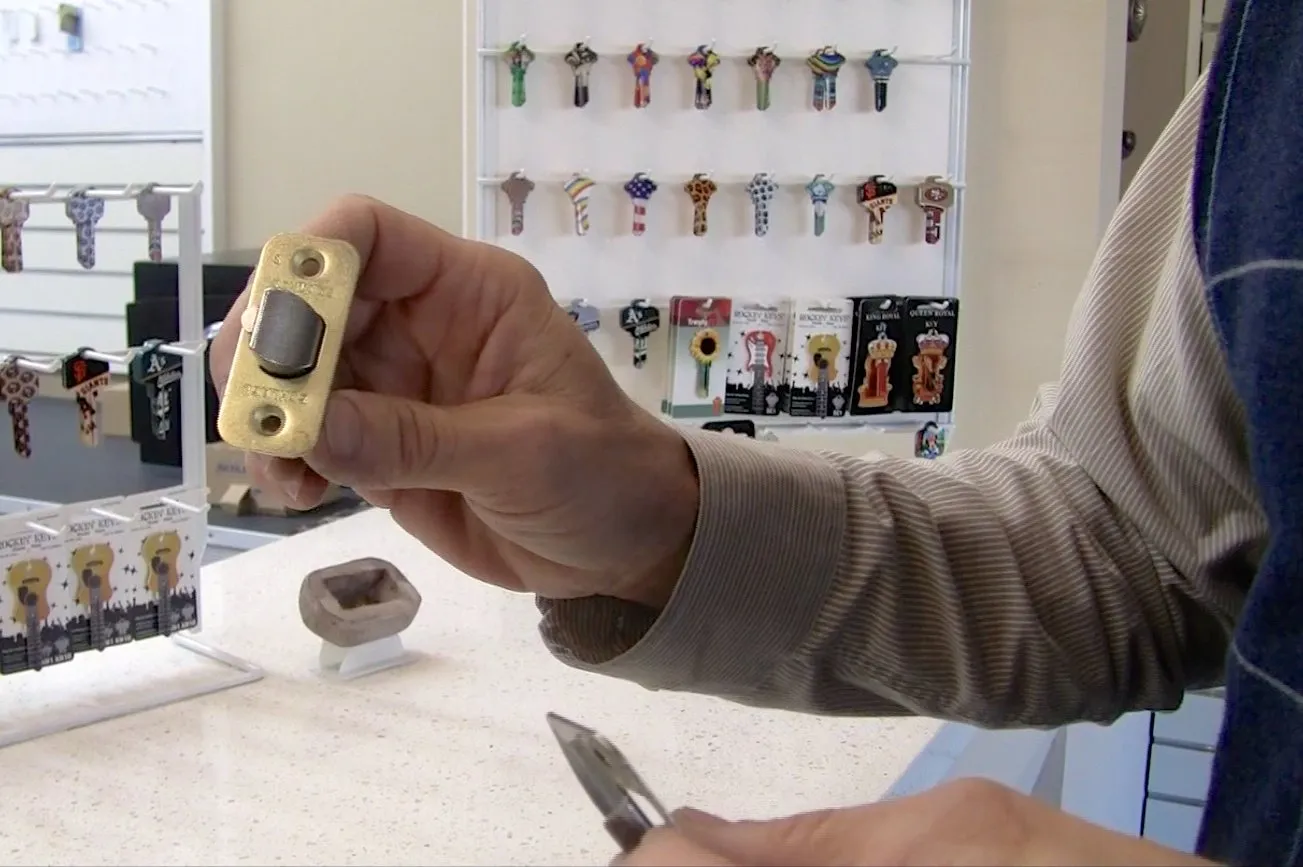
LOS ALTOS — If a door in your home is difficult to close, lock or unlock, it could be more than a mere inconvenience. In fact, a doorknob latch or deadbolt that isn’t functioning properly can actually make your home more susceptible to break-ins. To ensure greater security, it’s important to test all door latches and deadbolts for proper functioning and take steps to amend any malfunctioning components.
Testing a door latch
A doorknob latch consists of two parts: the main latch (the larger of the two) and the dead latch. When you close a door, the main latch falls into the hole in the adjacent strike plate, while the dead latch is held back. The function of the dead latch is to prevent would-be burglars from using a knife blade or credit card to push in the latch and open the door. However, sometimes both latches fall into the strike plate hole, which makes the lock susceptible to break-ins.
There are a couple ways to tell if your doorknob latch is functioning properly. First, listen for clicks when you close the door. If the latch is functioning properly, you should only hear one click. If you hear two clicks, that means the dead-latch is falling in as well. Also, check the strike plate on the door frame for wear marks, which can also indicate improper functioning.
Testing a deadbolt
The most important functional aspect of a deadbolt is its ability to “throw” fully, as it can’t be manually pushed back into its casing from a fully thrown position. Again, listen for a click—if you don’t hear one, it means your bolt isn’t throwing fully and your door’s security is compromised.
This issue often results when a contractor doesn’t drill a deep enough hole in the adjacent strike plate, which causes the deadbolt to be blocked from fully throwing. You can solve this problem yourself by further drilling or chiseling out this cavity until you’re able to hear a click when locking the deadbolt.