
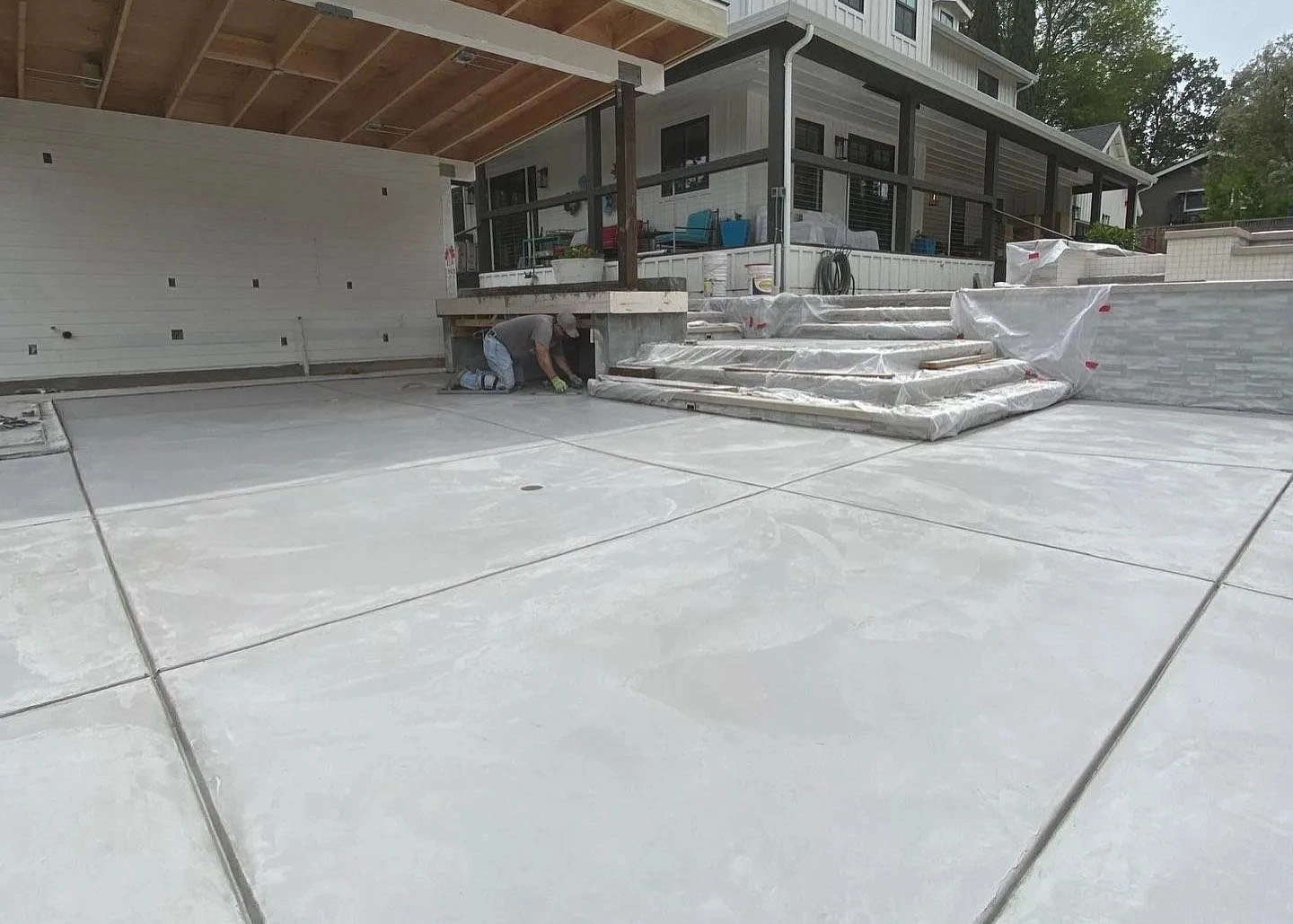
A durable concrete slab depends on more than the concrete itself. Before the slab is poured, the subgrade (the native soil beneath it) needs to be properly compacted. A layer of crushed rock or base rock should then be added and compacted until the foundation is tight and stable.
Without proper compaction, the soil and base material can shift or settle over time, which can cause issues like hairline cracks, premature deterioration or larger fractures. When combined with correctly installed rebar, a well-compacted base helps the slab remain stable and reduces the likelihood of costly repairs.
When it comes to the type of compaction equipment to use, it depends on the size of the project. A vibrating plate or jumping jack may be suitable for an area under 800 square feet, while larger projects may require a heavy-duty compactor or ride-on roller. Regardless of the equipment used, taking the time to properly prepare and compact the base is essential for long-lasting concrete.